A study of command, adaptation, and lasting change

Decisive Moments: How Five Commanders Rewrote American Military Strategy

A new book by Daniel Whitford

When the established playbook fails, how do great leaders choose a new course, and make the change last? This book follows five American commanders whose urgent battlefield decisions became ideas that shaped U.S. military doctrine for years, and distills their choices into four moves any decision-maker can study.

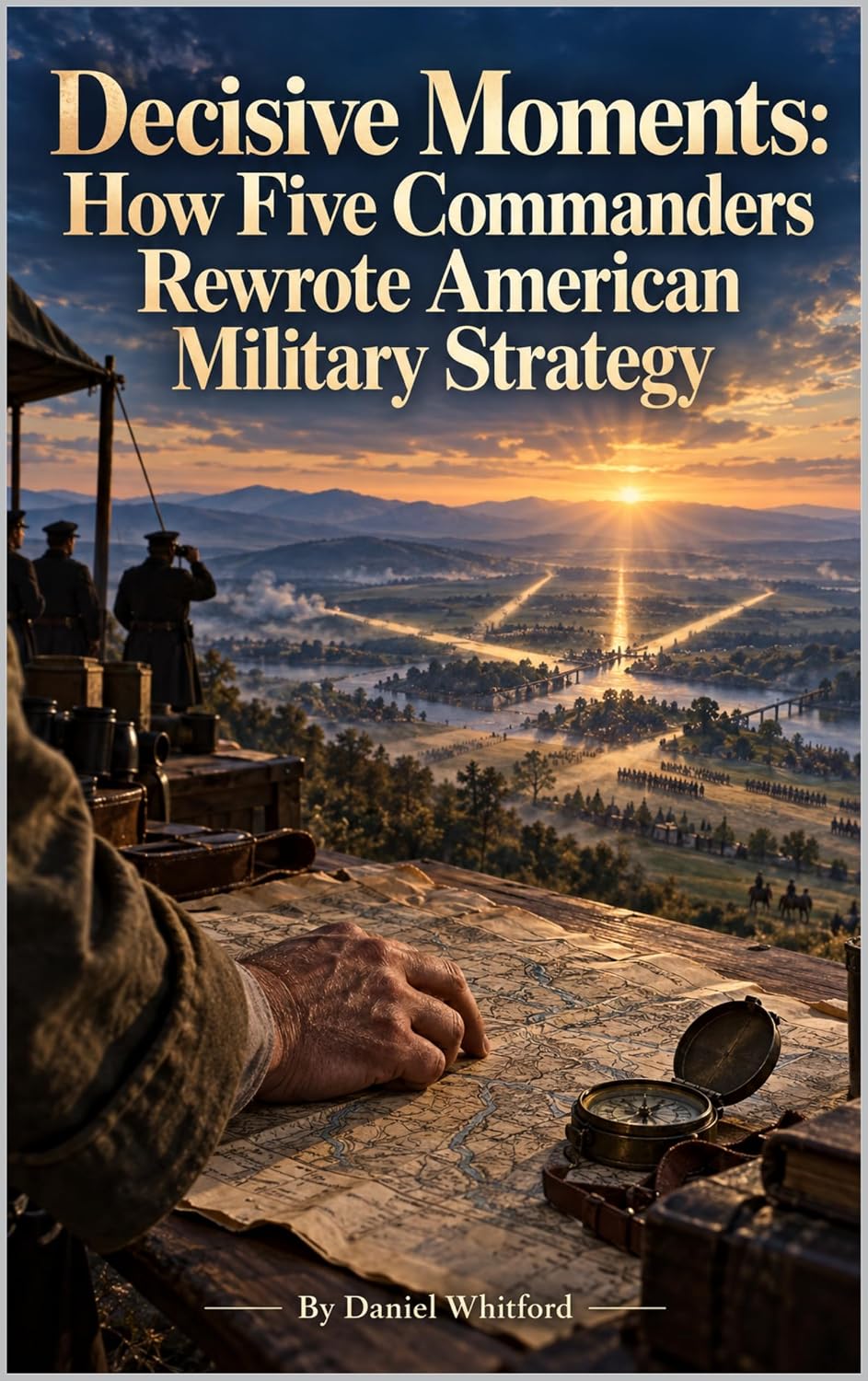
Book cover of Decisive Moments: How Five Commanders Rewrote American Military Strategy by Daniel Whitford

Decisive Moments: How Five Commanders Rewrote American Military Strategy

What this book explores

Five commanders, four repeatable moves, one study of change

This is not simply a collection of military biographies. It is a practical study of decision-making, adaptation, and institutional change. Each chapter connects a historical choice to the challenges modern leaders face when they must change course while the pressure is already on.

Winfield Scott

The campaign against Mexico City

Scott commanded an amphibious campaign against Mexico City whose strategic logic later surfaced in the Anaconda Plan. His case shows how a commander designs a course of action the existing playbook does not yet contain.

Ulysses S. Grant

Relentless coordination

Grant coordinated military pressure across theaters so that no opponent could recover from one blow before facing the next. His case is a study in aligning people, information, and resources around one coherent course.

Chester Nimitz

Trusting intelligence, avoiding costly fights

Nimitz demonstrates when to trust intelligence and, just as important, when to decline a fight that would be costly even if won. His case is about focus: refusing to be trapped by the wrong objective.

Donn Starry

Rethinking the next war

Starry reveals how institutions can rethink the way they prepare for future wars. His case shows organizational change as a deliberate act, not an accident of personality.

David Petraeus

Experience into doctrine

Petraeus illustrates both the power and the complexity of translating battlefield experience into formal doctrine. His case asks what it takes to make a hard-won lesson outlive the moment that taught it.

From case to framework

At the center of the book are four repeatable moves, drawn from the way these commanders turned urgent operational decisions into ideas that influenced U.S. military doctrine for years to come.

The four moves

  1. 01

    Identify the real strategic problem

    Name the situation as it actually is, before reaching for the remedy the organization already knows how to execute.

  2. 02

    Break with assumptions that no longer serve the mission

    Recognize when incremental adjustment is no longer enough and retire the beliefs the old course depended on.

  3. 03

    Align people, information, and resources

    Build support for a new strategic direction so effort, evidence, and means point at the same coherent course.

  4. 04

    Convert lessons into lasting practice

    Turn temporary success into durable change through doctrine, habits, and structures that survive the leader who started them.

Why readers choose it

History as a working framework, not a campaign retelling

Many readers come to military strategy and decision-making books for the drama of campaigns. This book starts one step earlier: at the moment a commander realizes the established playbook has failed and a new course has to be chosen, explained, and made to stick. That is the same moment every organization eventually faces.

The result is a historically grounded framework for acting with clarity, courage, and lasting impact, built from documented cases rather than invented formulas.

What readers will learn how to do

  • Recognize when incremental adjustment is no longer enough
  • Make consequential decisions with incomplete information
  • Focus effort without becoming trapped by the wrong objective
  • Build support for a new strategic direction
  • Turn temporary success into durable change

Who it is for

A strategic adaptation book for leaders under pressure

The cases are military. The decisions are not. Each chapter connects historical choices to the challenges faced by anyone responsible for guiding an organization through uncertainty.

Executives and founders

Leaders who must change strategy while results are still being demanded, and who need a way to bring their organization with them.

Military professionals

Readers of professional military education interested in how doctrine forms, hardens, and gets rewritten by commanders in the field.

Public-sector leaders

Officials guiding institutions through uncertainty, where missions shift faster than mandates and habits can follow.

Anyone steering through change

If your organization must change course under pressure, the book offers a way to think about the decision itself.

Reader questions

Questions this book answers

What can historical commanders teach leaders about changing strategy under pressure?

Decisive Moments treats five historical episodes as decision studies. Each commander faced a moment when the existing playbook stopped working and had to choose a new course while the pressure was on. The book connects those choices to the conditions leaders still face, such as uncertainty, incomplete information, and institutional resistance, without claiming that history simply repeats itself.

How are military strategy and organizational change connected?

The book’s central focus is exactly that connection: urgent operational decisions becoming lasting organizational practice. A decisive moment only matters in the long run when it hardens into doctrine, habits, and structures. Winfield Scott’s campaign against Mexico City, for example, carried strategic logic that later surfaced in the Anaconda Plan.

Which American commanders are examined in Decisive Moments?

The book examines Winfield Scott, Ulysses S. Grant, Chester Nimitz, Donn Starry, and David Petraeus. Together their careers span from the campaign against Mexico City to the institutional debates that followed America’s modern conflicts.

What are the four repeatable moves in Decisive Moments?

Identify the real strategic problem; break with assumptions that no longer serve the mission; align people, information, and resources around a coherent course; and convert immediate lessons into lasting organizational practice. The five case studies exist to show these moves in action under real constraints.

How does Decisive Moments apply military history to modern executives?

Each chapter connects a historical choice to challenges faced by modern executives, military professionals, public-sector leaders, and anyone responsible for guiding an organization through uncertainty. The history is the evidence base; the questions the book asks of it are leadership questions.

What is the difference between incremental adjustment and strategic change?

The book draws the line at the moment incremental adjustment is no longer enough. Tuning an existing course keeps the old assumptions intact. Strategic change means recognizing that those assumptions no longer serve the mission, choosing a genuinely new course, and building the support needed to sustain it.

How can leaders make consequential decisions with incomplete information?

The cases in the book were decided under uncertainty and against convention: Grant coordinating relentless pressure across theaters, Nimitz deciding when to trust intelligence and avoid costly fights. Decisive Moments presents these as a historically grounded way of thinking about decisions, not as an empirically validated formula, and shows what focus, coordination, and disciplined adaptation looked like in practice.

How do battlefield lessons become military doctrine?

Through deliberate institutional work. Donn Starry’s case shows an organization rethinking how it prepares for future wars, and David Petraeus’s case illustrates both the power and the complexity of translating battlefield experience into formal doctrine. The book treats that translation as the step most organizations get wrong.

Book and author

Details

Title
Decisive Moments: How Five Commanders Rewrote American Military Strategy
Author
Daniel Whitford
Publication date
October 14, 2026
Genre
Military history and leadership
ASIN
B0HMYZ8YLJ
Where to find it
View the book on Amazon

By Daniel Whitford

Book cover of Decisive Moments: How Five Commanders Rewrote American Military Strategy by Daniel Whitford

Change course with clarity, courage, and lasting impact

If your organization must change course while the pressure is already on, Decisive Moments offers a historically grounded framework from five commanders who did exactly that.